


Ceramics have been an integral part of human civilization for thousands of years, with applications ranging from simple pottery to advanced engineering components in modern industries. As technology advances, the demand for precise and efficient ceramic processing methods has grown significantly. Laser processing, a technology known for its high precision and versatility, has emerged as a potential solution for ceramic processing. In this blog, as a laser processing supplier, I will explore whether laser processing can indeed be used for ceramic processing, delving into its principles, advantages, challenges, and applications.
Principles of Laser Processing in Ceramic Materials
Laser processing involves the use of a highly concentrated beam of light to interact with materials. When a laser beam hits a ceramic surface, several physical processes can occur depending on the laser parameters such as wavelength, pulse duration, and power density.
One of the primary mechanisms is ablation, where the high - energy laser beam vaporizes or sublimates the ceramic material. This process is particularly effective for removing material in a controlled manner, allowing for the creation of precise patterns, holes, or cuts. Another mechanism is melting, where the laser energy heats the ceramic to its melting point, enabling reshaping or joining operations. For example, in laser welding of ceramics, the melted regions of two ceramic pieces fuse together upon cooling.
Advantages of Laser Processing for Ceramics
High Precision
One of the most significant advantages of laser processing is its ability to achieve extremely high precision. Lasers can produce features with micron - level accuracy, which is crucial for applications in microelectronics, medical devices, and aerospace components. For instance, in the production of ceramic microchips, laser processing can create fine circuits and vias with high repeatability, ensuring the reliable performance of the devices.
Non - Contact Processing
Laser processing is a non - contact method, meaning that there is no physical tool touching the ceramic material during processing. This eliminates the risk of mechanical stress, tool wear, and contamination that can occur in traditional machining methods. As a result, laser - processed ceramics have better surface quality and fewer defects, which is especially important for applications where surface integrity is critical, such as in optical components.
Versatility
Lasers can be used for a wide range of ceramic processing operations, including cutting, drilling, marking, welding, and surface modification. Different types of lasers, such as CO2 lasers, Nd:YAG lasers, and fiber lasers, can be selected based on the specific requirements of the ceramic material and the processing task. For example, CO2 lasers are commonly used for cutting and marking of ceramics due to their high absorption in the ceramic materials, while Nd:YAG lasers are more suitable for precision drilling and welding.
Flexibility in Design
Laser processing allows for great flexibility in design. Complex shapes and patterns can be easily programmed and processed without the need for expensive tooling changes. This is particularly beneficial for rapid prototyping and small - batch production, where quick turnaround times and design modifications are required. For example, in the production of custom - made ceramic jewelry or artistic pieces, laser processing can bring unique designs to life with high precision.
Challenges in Laser Processing of Ceramics
Thermal Cracking
Ceramics are generally brittle materials with low thermal conductivity. During laser processing, the rapid heating and cooling caused by the laser beam can generate high thermal stresses in the ceramic material, leading to cracking. This is a major challenge, especially when processing thick ceramics or performing high - energy laser operations. To mitigate this issue, pre - heating and post - heating treatments can be applied, and the laser parameters need to be carefully optimized to reduce the thermal shock.
Material Absorption Variations
The absorption of laser energy by ceramics depends on various factors such as the ceramic composition, microstructure, and laser wavelength. Different types of ceramics may have different absorption spectra, which can affect the efficiency and quality of laser processing. For example, some ceramics may have low absorption at certain laser wavelengths, requiring higher laser power or longer processing times. Therefore, a thorough understanding of the material properties and the selection of the appropriate laser wavelength are crucial for successful laser processing.
Surface Roughness
In some cases, laser processing can result in a relatively rough surface finish, which may not be suitable for applications that require a smooth surface, such as optical lenses or microfluidic channels. Post - processing operations, such as polishing, may be required to improve the surface quality. However, this adds additional time and cost to the manufacturing process.
Applications of Laser Processing in Ceramic Industries
Electronics
In the electronics industry, ceramics are widely used as substrates for printed circuit boards (PCBs), capacitors, and resistors. Laser processing is used to create fine circuits, drill vias, and mark component identification on ceramic substrates. The high precision and non - contact nature of laser processing make it ideal for the miniaturization and high - density integration of electronic components. For example, laser - drilled vias in ceramic PCBs can have diameters as small as a few microns, enabling the development of more compact and powerful electronic devices.
Medical
Ceramics are used in medical applications such as dental implants, bone substitutes, and surgical instruments. Laser processing can be used to fabricate complex shapes and surface textures on ceramic medical devices to improve their biocompatibility and functionality. For example, laser - textured surfaces on dental implants can enhance osseointegration, the process by which the implant fuses with the surrounding bone tissue, leading to better long - term stability.

Aerospace
In the aerospace industry, ceramics are used for high - temperature components such as turbine blades, heat shields, and insulation materials. Laser processing can be used to cut, drill, and repair these ceramic components with high precision. The ability to perform on - site repairs using laser processing is particularly valuable in the aerospace industry, where downtime needs to be minimized. For example, laser - based repair techniques can be used to fix cracks in ceramic turbine blades, extending their service life and reducing maintenance costs.
Related Products for Laser Processing
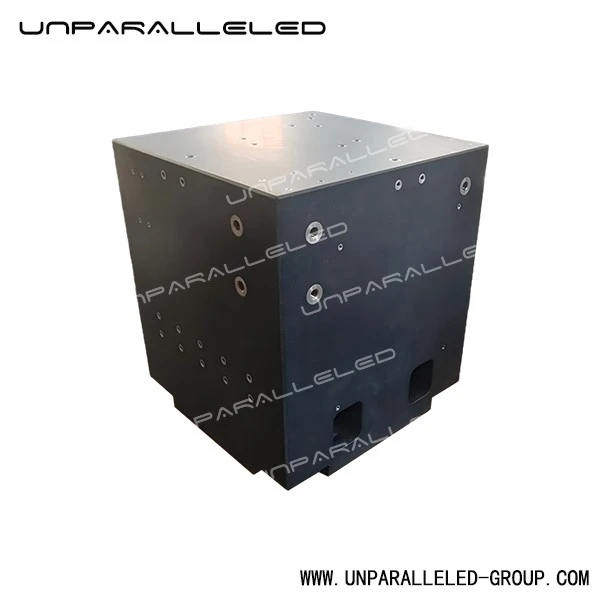
As a laser processing supplier, we also offer a range of products that are essential for high - precision laser processing. For instance, our Precision Granite Mechanical Components provide a stable and accurate platform for laser processing machines. The high - quality granite material ensures excellent thermal stability and dimensional accuracy, which is crucial for maintaining the precision of laser processing operations.
Our Advanced Laser Machine Granite Base is specifically designed to support laser processing machines. It offers superior vibration damping properties, reducing the impact of external vibrations on the laser beam and improving the processing quality.
In addition, our Precision Granite Straight Edge is an important tool for aligning and calibrating laser processing equipment. It provides a straight and flat reference surface, ensuring the accurate positioning of the laser beam and the workpiece.
Conclusion
In conclusion, laser processing can indeed be used for ceramic processing, offering numerous advantages such as high precision, non - contact processing, versatility, and design flexibility. However, it also faces challenges such as thermal cracking, material absorption variations, and surface roughness. With the continuous development of laser technology and the improvement of processing techniques, these challenges are being gradually overcome.
The applications of laser processing in ceramic industries are diverse and expanding, from electronics and medical to aerospace. As a laser processing supplier, we are committed to providing high - quality laser processing solutions and related products to meet the growing needs of our customers.
If you are interested in our laser processing services or related products, we invite you to contact us for further discussion and procurement negotiation. We look forward to working with you to achieve your ceramic processing goals.
References
- Bäuerle, D. (2011). Laser Processing and Chemistry. Springer.
- Mazumder, J. (Ed.). (2010). Laser Materials Processing. Wiley.
- Powell, J. (2015). Ceramics: Science and Engineering. Springer.