



The pursuit of speed in modern automation has created an unprecedented focus on machine dynamics. In high-speed manufacturing, robotics, and precision equipment, every gram of mass matters. Every microsecond of settling time impacts throughput. Every vibration transmitted through the structure affects quality. As manufacturers push the boundaries of what's possible in high-speed machines, the choice of structural materials has evolved from being a secondary consideration to becoming a strategic decision that directly determines system performance.
Two materials have emerged as the dominant choices for high-performance machine structures: carbon fiber composites and granite. Carbon fiber offers exceptional strength-to-weight ratios and dynamic characteristics that make it ideal for moving components. Granite provides unmatched stability and vibration damping that serves as the foundation for precision. The engineering challenge-and opportunity-lies in understanding when to use each material, and more importantly, how to combine their strengths in hybrid structures that deliver performance that neither material could achieve alone.
The Lightweight Imperative in High-Speed Machines
Modern high-speed automation systems operate at performance levels that would have seemed impossible just a decade ago. Robotic arms cycle at frequencies that approach mechanical resonances. Linear accelerations exceed 2G. Positioning accuracy requirements push into the micron and sub-micron range. In this context, mass is not just a weight to be supported-it is the enemy of speed and precision.
Consider a robotic system with a moving mass of 100kg. To accelerate this mass to 2m/s² requires 200N of force. If the structural mass can be reduced to 70kg while maintaining stiffness, the same acceleration requires only 140N-a 30% reduction in motor requirements and energy consumption. But more importantly, lower moving mass means less inertia to overcome during acceleration and deceleration, which directly translates to shorter cycle times and higher throughput.
The relationship between mass and machine performance is governed by fundamental physics. Force equals mass times acceleration. For a given actuator force, reducing mass increases achievable acceleration. Higher acceleration means shorter cycle times, which directly impacts production capacity. In competitive manufacturing environments where throughput differences of a few percentage points can determine market success, lightweight structures are not optional-they are essential.
Carbon Fiber Beams: The Lightweight Solution
Carbon fiber reinforced polymer (CFRP) has emerged as the premier material for lightweight machine structures, particularly for components that move or experience dynamic loading. The material properties that make carbon fiber exceptional are rooted in its fundamental structure: carbon atoms arranged in crystalline form aligned along the fiber axis, bonded together in a polymer matrix.
The strength-to-weight ratio of carbon fiber is extraordinary. T700-grade carbon fiber has a tensile strength exceeding 4900MPa, while weighing only 1.8g/cm³. For comparison, steel has a tensile strength of approximately 500-2000MPa depending on the alloy, with a density of 7.8g/cm³. Pound for pound, carbon fiber can be 5-10 times stronger than steel, while weighing only 23% as much. This combination of properties makes carbon fiber the material of choice for applications where both strength and lightweight are critical.
Beyond pure strength, carbon fiber offers excellent specific stiffness-the ratio of stiffness to weight. The modulus of elasticity for carbon fiber ranges from 230-600GPa, depending on the specific fiber type and orientation. This stiffness-to-weight advantage enables carbon fiber structures to maintain dimensional stability under load while being significantly lighter than metal alternatives. In high-speed machines, this means less deflection under dynamic forces, resulting in better positioning accuracy and faster settling times.
The vibration damping characteristics of carbon fiber are particularly valuable for dynamic applications. Carbon fiber composites exhibit damping characteristics that are superior to most metals, with loss factors typically 0.02-0.05 compared to 0.001-0.002 for aluminum and steel. This means that vibrations in carbon fiber structures decay 10-50 times faster than in metal structures, reducing the time required for structures to settle after movement. In high-speed machines where cycle times are measured in milliseconds, faster vibration settling directly translates to shorter cycle times.
Carbon fiber also offers exceptional fatigue resistance. The fatigue life of carbon fiber components can be 5-10 times longer than comparable steel components under cyclic loading. This durability is particularly valuable in high-speed automation systems where components experience millions of cycles over their service life. The ability to maintain performance over extended periods without degradation reduces maintenance requirements and improves overall equipment reliability.
Carbon Fiber in High-Speed Applications
The advantages of carbon fiber have made it the material of choice across a range of high-speed applications. In robotics, carbon fiber arms and end-effectors reduce moving mass, enabling faster acceleration and deceleration while reducing energy consumption. A robotic arm that weighs 40% less can accelerate 40% faster with the same motor, or use a smaller motor to achieve the same performance-either way improving system efficiency.
In transfer press automation, carbon fiber beams and tooling have demonstrated productivity improvements of 15-20%. One automotive hydroforming application switched from aluminum to carbon fiber end-effectors, resulting in a 6-second reduction in cycle time-a 15% improvement. The lighter tooling also allowed the robot to handle larger part payloads, further increasing productivity. The harmonic stability of carbon fiber reduced vibration and bounce, improving part consistency and process repeatability.
In high-speed packaging and material handling equipment, carbon fiber conveyor components and sorting mechanisms reduce moving mass, enabling higher throughput without increasing equipment footprint. The lighter components also reduce wear on motors, bearings, and other drive components, extending equipment life and reducing maintenance costs.
The aerospace industry has been using carbon fiber for decades in applications where weight reduction is critical. From aircraft structures to satellite components, carbon fiber enables performance levels that would be impossible with metal materials. These applications have driven the development of advanced carbon fiber manufacturing techniques and quality standards that are now being applied to industrial automation applications.
Granite: The Stability Foundation
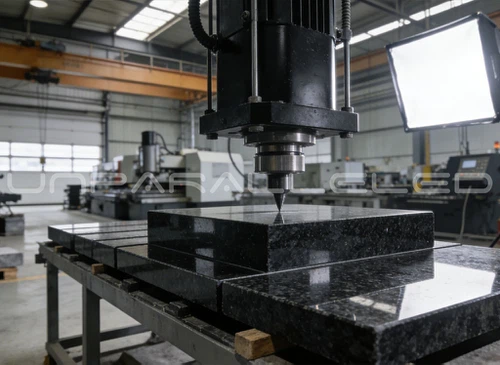
While carbon fiber excels in lightweight dynamic applications, granite offers a different but equally valuable set of characteristics centered around stability, vibration damping, and thermal performance. Granite has been used for precision machine foundations for over a century, but its role has evolved from passive surface plates to active structural components in modern high-performance equipment.
The vibration damping of granite is exceptional. The internal damping factor of granite can be 10-15 times better than cast iron and 20-30 times better than steel structures. This means that vibrations in granite structures decay rapidly, reducing the time required for machines to settle after dynamic movements. For high-speed machines where cycle times are critical, this rapid vibration settling is essential for maintaining throughput.
Thermal stability is another key advantage of granite. The thermal expansion coefficient of granite is approximately 8×10⁻⁶/°C, compared to 11-13×10⁻⁶/°C for steel and 23×10⁻⁶/°C for aluminum. This lower thermal expansion means that granite structures experience less dimensional change with temperature variation. More importantly, granite responds to temperature changes more slowly than metals due to its low thermal conductivity. This thermal inertia means that granite structures maintain their dimensions more stably during thermal cycling, which is critical for precision applications.
Granite is also inherently stress-free, unlike cast iron or welded steel structures which can contain residual stresses from manufacturing. These residual stresses can relax over time, causing dimensional changes that affect accuracy. Granite, having formed over millions of years under geological pressure, contains no internal stresses and maintains its geometry indefinitely without distortion.
The dimensional stability of granite over time is exceptional. High-density black granite can maintain flatness better than 0.001mm/m over decades of use with minimal maintenance. This long-term stability reduces calibration frequency and improves measurement confidence, which is particularly valuable in metrology and inspection applications where consistency is essential.
Granite in Precision Applications
Granite has become the standard material choice for coordinate measuring machines, optical inspection systems, and other precision metrology equipment. The combination of vibration damping, thermal stability, and long-term dimensional stability makes granite ideal for applications where measurement accuracy is the primary requirement.
In high-speed machining centers, particularly grinding machines, granite bases provide the stability needed for precision while the damping characteristics improve surface finish and tool life. Granite bases can maintain positioning accuracy better than metal bases, even under high-speed machining conditions that would cause metal structures to vibrate.
Semiconductor lithography and inspection equipment relies heavily on granite structures to achieve the nanometer-level positioning accuracy required for advanced semiconductor manufacturing. The thermal stability of granite is particularly critical in these applications, where temperature variations of even a fraction of a degree can affect overlay accuracy on wafers.
Laser cutting and engraving machines benefit from granite's vibration damping and thermal stability, which improve cut quality and positioning accuracy, particularly at high cutting speeds. The stability of granite bases also enables higher cutting speeds without sacrificing quality, improving productivity.
The Performance Trade-Off: Lightweight vs Stability
The fundamental difference between carbon fiber and granite lies in their primary performance characteristics. Carbon fiber prioritizes lightweight and high stiffness, making it ideal for components that move or experience dynamic loading. Granite prioritizes stability and damping, making it ideal for stationary components that provide reference surfaces or support moving components.
This trade-off becomes clear when comparing the materials across key performance parameters:
Density: Carbon fiber has a density of approximately 1.8g/cm³, compared to 2.7g/cm³ for aluminum, 7.8g/cm³ for steel, and 2.9-3.0g/cm³ for granite. For moving components, carbon fiber's lower density directly reduces moving mass, improving acceleration and reducing energy consumption. For stationary foundations, granite's higher mass can be advantageous, as it provides inertia that resists movement and vibration.
Stiffness: Carbon fiber can achieve modulus values of 230-600GPa depending on fiber type and orientation, compared to 200GPa for steel, 69GPa for aluminum, and 85GPa for granite. Carbon fiber's high stiffness-to-weight ratio makes it ideal for moving structures where deflection under load must be minimized without adding mass. Granite's stiffness is adequate for most foundation applications, and its higher mass provides stability that compensates for lower modulus values.
Vibration Damping: Granite has exceptional vibration damping, with internal damping factors 10-15 times better than cast iron and 20-30 times better than steel. Carbon fiber also offers good damping compared to metals, but generally not as good as granite. For moving components, carbon fiber's damping is adequate and helps reduce settling time. For foundations, granite's superior damping provides the stability needed for precision applications.
Thermal Expansion: Carbon fiber can have negative or near-zero thermal expansion when the fibers are properly oriented, while granite has a thermal expansion coefficient of approximately 8×10⁻⁶/°C, compared to 11-13×10⁻⁶/°C for steel and 23×10⁻⁶/°C for aluminum. For moving components, carbon fiber's low thermal expansion reduces dimensional changes with temperature, improving accuracy. For foundations, granite's low thermal expansion combined with high thermal inertia provides excellent dimensional stability.
Cost: Carbon fiber is significantly more expensive than granite on a per-kilogram basis, often 3-5 times higher cost. However, the total cost of ownership must consider factors beyond initial material cost, including manufacturing costs, performance benefits, and lifecycle costs. In high-speed applications, the productivity improvements from lightweight carbon fiber structures can provide return on investment that justifies the higher initial cost.
The Hybrid Advantage: Combining Carbon Fiber and Granite
The most sophisticated high-speed machine designs recognize that carbon fiber and granite are not competing materials-they are complementary materials that can be combined to achieve performance levels that neither could deliver alone. Hybrid structures leverage the strengths of each material while mitigating their weaknesses.
A typical hybrid approach uses granite for the stationary machine base and foundation, providing exceptional stability and vibration damping. Carbon fiber is used for moving components such as gantry beams, robot arms, and end-effectors, minimizing moving mass and improving dynamic performance. The granite base provides the stable reference platform, while the carbon fiber moving components enable high-speed operation with minimal energy consumption.
This hybrid approach is evident in advanced coordinate measuring machines, where granite bases provide dimensional stability while carbon fiber gantry structures reduce moving mass, enabling faster scanning speeds without sacrificing accuracy. In laser processing equipment, granite bases provide vibration damping for precision cutting, while carbon fiber beam structures enable high-speed movement between cutting positions.
Engineering Considerations for Hybrid Structures
Designing effective hybrid structures requires careful consideration of several engineering factors:
Interface Design: The connections between carbon fiber and granite components must accommodate differential thermal expansion while maintaining stiffness and precision. Precision mounting techniques, often involving bonded inserts or mechanical fasteners with controlled preload, ensure that the interface maintains accuracy over time.
Dynamic Matching: The natural frequencies of carbon fiber moving components should be tuned to avoid resonances with the granite base. Finite element analysis and modal testing ensure that the combined structure exhibits desirable dynamic characteristics, with vibration modes properly separated from operating frequencies.
Thermal Management: While both materials have good thermal stability, their different thermal characteristics must be managed. Temperature gradients between the granite base and carbon fiber components can cause dimensional variations that affect accuracy. Thermal isolation strategies and active temperature control may be necessary for the most demanding applications.
Damping Optimization: While both materials provide vibration damping, the overall damping characteristics of hybrid structures can be optimized through careful design. The interface between materials can incorporate additional damping materials or viscoelastic layers to improve energy dissipation and reduce settling times.
Applications Where Carbon Fiber Excels
Carbon fiber beams and structures are particularly advantageous in applications where moving mass must be minimized and dynamic performance is critical:
High-Speed Robotics: Robotic arms, end-effectors, and gantry systems benefit from carbon fiber's lightweight and stiffness. Reduced moving mass enables faster acceleration and deceleration, improving cycle times and throughput. The superior damping of carbon fiber compared to metals also reduces settling time after rapid movements.
Transfer Press Automation: Transfer beams and tooling in press transfers operate at extremely high cycle rates, with some systems exceeding 60 strokes per minute. Carbon fiber tooling reduces moving mass, enabling higher speeds while reducing vibration and improving part quality. Productivity improvements of 15-20% have been documented in automotive transfer press applications.
Linear Motor Systems: High-speed linear motor systems benefit from carbon fiber's lightweight, which reduces the moving mass that the linear motor must accelerate. This allows higher acceleration and velocity without increasing motor size or power consumption. The stiffness of carbon fiber also maintains positioning accuracy at high speeds.
Aerospace and Defense: Aircraft manufacturing, satellite assembly, and defense systems leverage carbon fiber's lightweight and strength. Reduced moving mass in robotic assembly systems enables faster operation and improved precision. The corrosion resistance of carbon fiber is also valuable in aerospace environments where materials must withstand harsh conditions.
Semiconductor Manufacturing: While granite dominates in metrology applications, carbon fiber is used in high-speed wafer handling and inspection equipment. The lightweight enables faster wafer transfer between process steps, improving throughput. The non-magnetic properties of carbon fiber are also beneficial in semiconductor applications where magnetic interference must be minimized.
Applications Where Granite Excels
Granite structures are particularly advantageous in applications where stability and damping are critical:
Coordinate Measuring Machines: CMMs require exceptionally stable foundations to maintain measurement accuracy. Granite bases provide the dimensional stability and vibration damping needed for precision metrology. The thermal stability of granite also ensures consistent accuracy across varying environmental conditions.
Optical Inspection Systems: Vision inspection systems, particularly those used in semiconductor manufacturing, benefit from granite's stability and damping. Vibration isolation is critical for maintaining imaging resolution, and granite's superior damping characteristics reduce vibration transmission from the environment.
High-Speed Grinding Machines: Precision grinding machines require exceptional stability to achieve tight tolerances on finished parts. Granite bases provide the foundation needed for precision grinding, while the damping characteristics improve surface finish and tool life. The thermal stability of granite also maintains accuracy during long grinding cycles.
Laser Processing Equipment: Laser cutting, engraving, and marking systems benefit from granite's stability and damping, particularly at high processing speeds. Granite bases provide the stable platform needed for precision laser processing, while damping reduces vibration that can affect cut quality.
Research and Development: Laboratory equipment, experimental setups, and research instrumentation often use granite bases to provide stable platforms for sensitive measurements. The long-term dimensional stability of granite reduces calibration frequency and improves measurement confidence.
Making the Material Selection Decision
The decision between carbon fiber, granite, or a hybrid approach depends on multiple factors specific to the application:
Performance Requirements: The primary performance driver should guide material selection. If speed and cycle time are the critical factors, carbon fiber's lightweight advantages may be decisive. If accuracy and stability are paramount, granite's damping and thermal characteristics may be more important. The most demanding applications often require both, leading naturally to hybrid solutions.
Cost Considerations: Initial material cost must be balanced against lifecycle cost and performance benefits. While carbon fiber has higher initial cost, productivity improvements can provide significant return on investment in high-speed applications. Granite's lower initial cost and long-term stability make it cost-effective for precision applications.
Manufacturing Complexity: Both materials require specialized manufacturing capabilities. Carbon fiber components require expertise in composite layup, curing, and machining. Granite components require precision stone working and finishing capabilities. The availability of manufacturing expertise should influence material selection.
Integration Requirements: The complexity of integrating the chosen material into the overall system design must be considered. Hybrid structures add engineering complexity but can deliver superior performance when properly executed. The interface design between materials is critical and requires careful engineering.
UNPARALLELED's Expertise in Advanced Materials
At UNPARALLELED, we understand that material selection is not just about choosing a material-it's about optimizing system performance through intelligent material choices. With 30 years of experience in precision manufacturing across granite, ceramics, and metals, and growing expertise in carbon fiber composites, we bring unique perspective to high-speed machine design.
Our capabilities include:
Granite Components: Precision granite bases, stages, and structural components manufactured to the highest accuracy standards. Our experience with semiconductor, aerospace, and metrology applications provides deep insight into the most demanding requirements for precision granite components.
Carbon Fiber Components: Advanced carbon fiber structures designed and manufactured for high-performance applications. Our expertise in composite materials enables us to optimize fiber orientation, layup sequence, and matrix selection to achieve specific performance requirements.
Hybrid Structure Design: Engineering services for hybrid structures that combine carbon fiber and granite to achieve performance levels that neither material could deliver alone. Our experience with material interfaces, thermal expansion compensation, and dynamic optimization ensures that hybrid structures perform as designed.
System Integration: Comprehensive support for integrating advanced material components into complete machine systems. From design consultation through manufacturing and testing, we provide the expertise needed to realize the full potential of advanced materials in high-speed machines.
Conclusion: The Future of High-Speed Machine Design
The evolution of high-speed machines has fundamentally changed how engineers approach structural material selection. No longer is it sufficient to choose a material based on strength and cost alone. Modern high-speed machines require materials that deliver specific combinations of properties-lightweight for moving components, stability for foundations, damping for vibration control, and thermal stability for accuracy.
Carbon fiber and granite represent the leading edge of material technology for high-speed machines, each offering a unique set of properties optimized for different roles. Carbon fiber excels in lightweight dynamic applications where moving mass must be minimized. Granite excels in stability-critical applications where vibration damping and thermal stability are essential.
The most sophisticated machine designs recognize that these materials are complementary rather than competing. Hybrid structures that leverage the strengths of both materials deliver performance levels that exceed what either material could achieve alone. As manufacturers continue to push the boundaries of speed and precision, hybrid designs will become increasingly common, requiring deep expertise in both materials and the engineering principles for combining them effectively.
For organizations developing the next generation of high-speed machines, the material choice is not just a technical decision-it is a strategic decision that affects performance, cost, and market competitiveness. Making the right choice requires understanding not just material properties, but how those properties translate to system-level performance in specific applications.
At UNPARALLELED, we help manufacturers navigate these complex material decisions and realize the full potential of advanced materials in high-speed machines. Whether you need lightweight carbon fiber structures for high-speed motion, stable granite foundations for precision, or hybrid solutions that combine the best of both, our expertise across advanced material systems provides the foundation for superior performance.
Ready to optimize your high-speed machine performance with advanced materials? Contact UNPARALLELED today to discuss your requirements and learn how our expertise in carbon fiber, granite, and hybrid structures can help you achieve breakthrough performance in your applications.