



Granite surface plates are widely used in construction, mechanical engineering, and precision metrology due to their excellent hardness, durability, and dimensional accuracy. Producing a high-quality granite surface plate involves a meticulous multi-stage process, from quarrying raw blocks to surface finishing and packaging.
1. Raw Granite Block Selection and Preparation
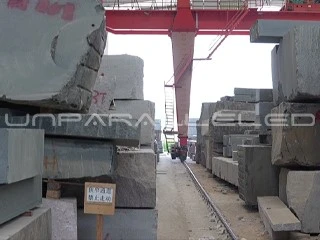
The first step in manufacturing a granite surface plate is selecting high-quality raw granite blocks, usually quarried from well-known stone mines. Key selection criteria include:
Uniform color and texture
High hardness and density
Minimal cracks or natural defects
Once extracted, the raw granite undergoes initial trimming and surface cleaning (e.g., removing the outer crust or impurities) to prepare it for cutting and shaping.
2. Cutting and Thickness Calibration
After raw block preparation, the granite is cut into slabs using diamond blade circular saws or gang saws, based on the required plate dimensions and thickness.
During this step:
Cutting speed and accuracy are strictly controlled to minimize internal stress or cracks.
Slabs are rough-ground to calibrated thickness using precision grinding equipment, ensuring a consistent and even surface.
3. Surface Grinding, Polishing, and Finishing
This is one of the most crucial steps in producing high-quality granite surface plates.
Grinding and Polishing Process:
Multiple stages of grinding are performed using increasingly fine abrasives, from coarse to ultra-fine.
The goal is to achieve the required surface flatness, smoothness, and gloss level.
Surface Finish Types:
Depending on the end-use, different surface treatments can be applied:
Polished – glossy and reflective
Flamed – textured, non-slip surface
Bush-hammered / Sandblasted / Honed – decorative or functional finishes
4. Edge Cutting and Layout Arrangement
Once the slab surfaces are finished, edge trimming is performed using edge-cutting machines to ensure straight, clean borders and remove rough edges or burrs.
Then, slabs are arranged and labeled according to size, thickness, and order number to streamline the inspection, packaging, and shipment stages.
5. Custom Processing and Quality Inspection
Depending on customer requirements, secondary processing may be added, including:
Drilling holes
Chamfering edges
Grooving or notching
After final machining, each slab undergoes rigorous quality control:
Dimensional accuracy (length, width, thickness)
Flatness and surface quality
Texture uniformity and visual inspection
Only slabs that meet international tolerance standards are approved for delivery.
6. Surface Protection and Packaging
To protect the granite surface plates during transport and storage, several protective measures are applied:
Anti-stain sealers or protective film
Edge guards or foam separators
Custom crates or reinforced wooden pallets
Proper packaging ensures that slabs remain intact without cracks, scratches, or chipping during transit, especially for export shipments.
7. Summary: What Makes a High-Quality Granite Surface Plate
The production of granite surface plates is a technically controlled, step-by-step process. Each stage-from raw material selection to precision grinding, inspection, and packaging-must be carried out with strict quality assurance.
When properly manufactured, a granite surface plate offers:
International-standard flatness
High mechanical strength
Thermal stability
Long-term durability for industrial use
Looking for reliable granite surface plate suppliers?
We manufacture and export custom granite surface plates, inspection slabs, and precision stone components from premium-grade Jinan Black Granite. Contact us for product details, specs, or a free quote.