



Large‑size heavy‑duty granite surface plates are widely used in large optical inspection equipment, automated tooling, metrology laboratories, linear motor platforms and other scenarios. Due to their huge self‑weight and wide surface area, errors in material selection will lead to deformation, cracking and accuracy attenuation that can hardly be compensated by on‑site adjustment. Repair and replacement costs are extremely high. Many purchasers only focus on finished flatness indicators while ignoring inherent conditions of base materials, resulting in frequent hidden accuracy risks after equipment commissioning. Proper substrate screening is the first barrier to ensure long‑term stable performance of heavy‑duty plates.
First of all, inspect the mineral structure. Prioritize black granite blanks with compact texture and uniform crystal grains. Large‑size blanks inevitably have natural texture variations. Some blanks feature loose texture, uneven mineral‑grain distribution and subtle interlayers. Though qualified in short‑term inspection after processing, such stones will suffer slow surface distortion under cyclic temperature and long‑term dead‑weight load, caused by inconsistent thermal expansion coefficients of different minerals. High‑quality substrates reach density of 3100 kg/m³, featuring compact internal structure, low thermal expansion coefficient and excellent damping performance to resist geometric changes induced by environmental fluctuation. Ordinary marble and loose granite shall be strictly rejected.
Secondly, verify blank integrity and reject spliced materials. To cut raw‑material costs, some manufacturers splice multiple stone blocks for large‑tonnage plates. Even after grinding, mechanical performance at joints differs greatly from monolithic blanks. Joints are prone to dislocation and gaps under temperature change and vibration, destroying the integrity of reference surfaces. Qualified heavy‑duty metrology plates must be processed from one single intact blank to guarantee consistent mechanical properties, which is a non‑negotiable principle for large‑size products.
Stress status of blanks is easily overlooked during material selection. Mining and sawing leave massive geological and cutting stress inside stone. Even without visible cracks, residual internal stress will release gradually over time. If processed directly into finished goods, plates may pass factory inspection yet arch or warp after transportation and seasonal temperature variation. Beyond visual inspection, confirm blanks have undergone sufficient natural aging in open‑air stockyards to release most internal stress before cutting and grinding. Deformation shall be resolved within factory instead of at customer site. 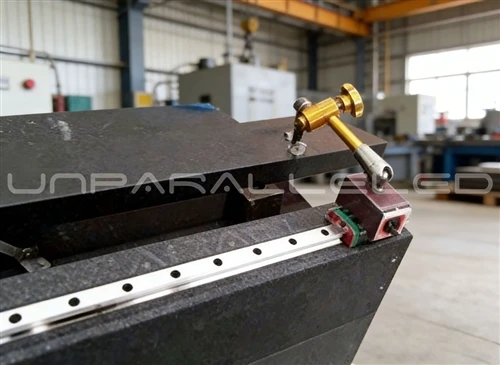
Consistency of physical properties also matters. Significant regional differences in hardness and thermal performance over large plates will cause uneven grinding removal rate, making ultra‑precision full‑surface flatness hard to achieve. Require suppliers to provide substrate performance data covering thermal expansion coefficient, water absorption and rigidity. Stones with high water absorption are susceptible to humidity‑driven degradation and unfit for long‑term high‑precision metrology workstations.
After material selection, supporting processing capacity shall also be evaluated. Premium blanks cannot produce qualified heavy‑duty plates without constant‑temperature & humidity vibration‑isolated workshops, large‑travel grinding machines and complete imported metrology instruments. Finished plates require full‑area grid inspection by laser interferometers and high‑precision electronic levels. All test equipment shall be traceable to metrology authorities and meet DIN, ASME, GB and other international acceptance standards. Assess supplier's full‑chain capacity covering hoisting, processing, aging and inspection to avoid rejects caused by poor workmanship even with good raw materials.
Note that premium substrates cannot prevent damage from improper storage, rough hoisting and overloading. UNPARALLELED large‑size heavy‑duty granite surface plates adopt monolithic intact black granite blanks with sufficient stockyard aging. Machining and comprehensive inspection are completed in vibration‑isolated constant‑temperature workshops. We control substrate quality from source and deliver high‑stability reference platforms for large inspection tooling, scientific metrology and high‑end automated equipment.