



As the core substrate for ultra-precision components, cast iron base is the classic choice for traditional machine tools, while high-density precision granite base has become the standard substrate for high-end precision equipment. The most critical performance dividing line between the two lies in thermal response speed, deformation range, deformation uniformity and precision retention under temperature variation. Breaking away from conventional parameter listing, this article deeply analyzes the performance gap between the two bases based on real industrial temperature difference working conditions, and reveals why high-end ultra-precision equipment fully abandons ordinary cast iron bases and selects premium granite bases.
1. Root cause: Material thermal properties differ fundamentally, leading to innate disparity in temperature resistance
All materials expand with heat and contract with cold when temperature changes, but cast iron and UNPARALLELED® premium black granite have vastly different molecular structures and thermal conduction characteristics, which create completely different temperature adaptation capabilities. This is the underlying logic for all performance differences.
Cast iron is a homogeneous metal material with high thermal conductivity and rapid thermal diffusion, making it extremely sensitive to temperature changes. Heat from the workshop environment and equipment operation quickly penetrates the cast iron matrix, and a temperature gradient with high temperature in the center and low temperature at edges tends to form easily, resulting in uneven heating of the whole body and irregular deformation. Meanwhile, the thermal expansion coefficient of cast iron reaches 11~13×10⁻⁶/℃. Tiny temperature variation will trigger obvious dimensional expansion and contraction.
UNPARALLELED® exclusive high-density black granite is formed by hundreds of millions of years of geological crystallization, featuring dense and pore-free structure with a density up to 3100kg/m³, superior to ordinary European and American granite and inferior marble on the market. Its thermal expansion coefficient is only 4.5~6×10⁻⁶/℃, less than half of cast iron. After ultra-precision grinding, the thermal deformation can reach 0.5μm/m·℃. More importantly, the thermal diffusion rate of granite is 40 times slower than cast iron, possessing strong thermal inertia. It can effectively lock shape and stabilize dimension against instantaneous temperature difference and periodic temperature change, avoiding rapid dimensional variation following temperature fluctuations.
2. Comparison under actual working conditions: Deformation gap under different temperature difference scenarios
There is no absolutely constant temperature environment in industrial production. The performance gap between the two bases will be precisely amplified from minor daily temperature fluctuations to large seasonal temperature changes. We intuitively compare combined with real equipment working conditions and quantified data:
2.1 Minor temperature fluctuation (±2~5℃, regular working condition in constant-temperature workshop)
Although high-end precision workshops are equipped with constant temperature systems, equipment start-stop, manual operation and self-heating of equipment will generate minor temperature fluctuation of 2-5℃, which is the most common working condition.
Take a 10-meter machine tool base as an example. Under 5℃ temperature difference, the cast iron base will produce linear deformation of 0.55~0.65mm. Due to temperature gradient, the base will have slight arching, warping and edge offset as irregular deformation, directly damaging the guide rail parallelism and table flatness of equipment, causing micron-level errors in laser processing and precision inspection. Accumulated over time, positioning deviation of equipment will occur.
Under the same temperature condition, the deformation of UNPARALLELED black granite base is merely 0.2~0.3mm with uniform deformation and no local warpage. Relying on dense molecular structure, the stone is heated evenly as a whole without local temperature stress, maintaining the table flatness and reference accuracy consistently, fully meeting nano-level precision requirements for semiconductor, precision image inspection and other scenarios.
2.2 Large temperature alternation (±10~15℃, diurnal / seasonal working condition)
Large temperature difference of 10-15℃ is common in non-full-time constant-temperature workshops, outdoor commissioning and seasonal production scenarios, which is a frequent scenario for precision failure of cast iron bases.
At 10℃ temperature difference, the deformation of 10-meter cast iron base can reach 1.1~1.3mm. The metal matrix absorbs and dissipates heat fast, and continuous expansion and contraction will occur with repeated temperature fluctuation, generating accumulated temperature stress. After long-term service, irreversible tiny deformation, table distortion and precision attenuation will appear on cast iron bases, requiring frequent disassembly, calibration, grinding and repair, greatly increasing equipment maintenance cost and downtime loss.
Under corresponding working conditions, the deformation of 10-meter UNPARALLELED granite base is only 0.45~0.6mm. With excellent thermal inertia, dimensional change occurs slowly and steadily during temperature rise and fall without repeated expansion and contraction oscillation. Meanwhile, stone has no metal fatigue and will not produce accumulated temperature stress. It can maintain stable reference accuracy after long-term exposure to diurnal and seasonal temperature alternation without frequent calibration and maintenance.
2.3 Instantaneous temperature shock (equipment start-stop, local heat generation working condition)
High-speed operation of machine tools and continuous work of laser equipment will generate local heat sources, and rapid cooling after equipment shutdown forms instantaneous temperature shock, which is the core weakness of traditional cast iron bases.
Cast iron conducts heat quickly. Local heat spreads rapidly but unevenly, easily resulting in local protrusion and depression of the base, directly destroying the reference plane of equipment, leading to inconsistent precision of single processing and inspection, and batch errors. Especially in scenarios with extremely high requirements for instantaneous precision stability such as femtosecond laser, PCB precision drilling and new energy lithium battery inspection, the instantaneous deformation defect of cast iron base will directly cause product rejection.
Granite conducts heat slowly and uniformly. Local heat sources will not trigger rapid local deformation and can buffer instantaneous temperature shock to keep consistent equipment reference. Combined with UNPARALLELED's exclusive constant temperature & humidity shockproof workshop process, the base can completely avoid dual interference from vibration and temperature difference, achieving stable output of nano-level precision continuously.
3. Hidden gap: Comprehensive performance differences derived from temperature variation
Temperature difference brings not only intuitive deformation, but also all-round gaps in precision retention, service life, applicable scenarios and operation & maintenance costs. This is the core reason why top enterprises and Fortune Global 500 customers in the industry prefer granite bases.
In terms of precision durability, cast iron bases suffer continuous tiny deformation and stress accumulation under cyclic temperature difference. The accuracy will attenuate obviously after 1-2 years of service, failing to meet the long-term stable production requirements of ultra-precision industry. Premium granite base has constant physical properties, resisting temperature variation and aging deformation with extremely low long-term precision attenuation, serving as the optimal carrier for long-term precision reference.
In terms of anti-interference ability, cast iron has dual defects of thermal deformation and vibration deformation. The error will keep amplifying when thermal deformation overlaps with mechanical vibration. UNPARALLELED black granite features high density, great rigidity and excellent damping performance. It not only stands out in temperature resistance, but also effectively absorbs vibration during equipment operation to realize dual stability of temperature and vibration.
In terms of scenario adaptability, cast iron bases are only suitable for rough machining and conventional mechanical processing, unable to meet ultra-precision scenarios such as semiconductors, precision metrology, aerospace and high-end laser equipment. High-precision granite bases can fully cover various high-end precision working conditions and are designated substrates for experimental equipment of international metrology institutes and top universities.
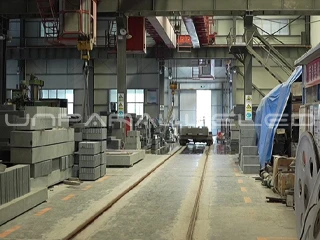
4. Industry pitfall reminder: Temperature stability depends on substrate quality, not all stone materials are qualified
At present, many small manufacturers cut corners and replace high-end precision granite with ordinary marble of low density and poor stability. Although inferior stone performs better than cast iron, it has high thermal expansion coefficient and uneven material, prone to cracking, deformation and precision drift under temperature variation, which cannot reach ultra-precision industrial standards.
UNPARALLELED® black granite is selected strictly and optimized by secondary crystallization. Its density and thermal stability outperform imported granite from Europe and America, eliminating hidden dangers of thermal deformation from the source. With manual nano-level grinding technology of more than 30 years, calibration by world-class testing equipment and adaptation system of multiple national metrology standards, the thermal deformation, flatness and precision stability of each granite machine tool base are traceable, fulfilling the quality principle that "The precision business can't be too demanding".
Conclusion
The performance gap between granite machine tool base and cast iron base is clear from minor temperature fluctuation to large thermal shock: Cast iron fits conventional working conditions, vulnerable to temperature variation and fast precision attenuation; high-end precision granite resists temperature fluctuation with constant precision and outstanding stability. With continuous upgrading of ultra-precision industry, temperature stability has become the core cornerstone of equipment accuracy. UNPARALLELED always provides long-term stable reference support for global high-end precision equipment with stringent material standards, process standards and testing standards, boosting high-quality development of ultra-precision industry.