


As an air bearing supplier, I often get asked if air bearings can work in low - temperature environments. It's a valid question, especially considering the wide range of applications where air bearings are used, from high - tech manufacturing to aerospace. In this blog, I'll share my insights on this topic and discuss the factors that affect the performance of air bearings in cold conditions.
How Air Bearings Work
First, let's quickly go over how air bearings work. Air bearings use a thin film of pressurized air to support a load and reduce friction. This air film acts as a lubricant, allowing for smooth and precise motion. They're known for their high - speed capabilities, low wear, and excellent precision, which makes them ideal for many industrial applications.
Challenges in Low - Temperature Environments
When it comes to low - temperature environments, air bearings face several challenges. One of the main issues is the change in air properties. As the temperature drops, the viscosity of air increases. This can affect the flow of air through the bearing, potentially leading to changes in the bearing's performance.
Another challenge is the potential for condensation. In cold environments, water vapor in the air can condense on the bearing surfaces. This can cause corrosion and damage to the bearing components over time. Additionally, ice formation can occur, which can disrupt the air film and lead to uneven loading and reduced performance.
Material Considerations
The materials used in air bearings also play a crucial role in their performance in low - temperature environments. For example, some materials may become brittle at low temperatures, increasing the risk of cracking or breakage. On the other hand, certain materials are more resistant to cold and can maintain their mechanical properties.
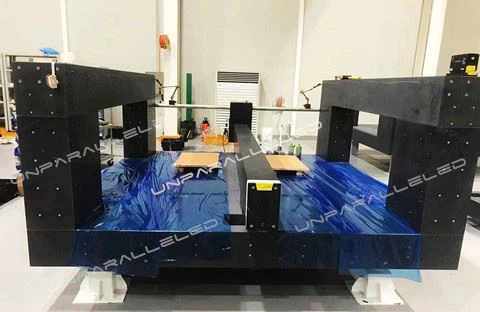
We at our company pay close attention to material selection. We use high - quality materials that are designed to withstand low temperatures. For instance, our Granite Altimeter Machine Base is made from precision granite, which has excellent thermal stability and can perform well in a wide range of temperatures.
Design Adaptations
To ensure that air bearings can work effectively in low - temperature environments, we've made several design adaptations. One of these is the use of special seals. These seals help to prevent moisture from entering the bearing and causing damage. We also optimize the air flow channels in the bearing design to account for the changes in air viscosity at low temperatures.
Another important design aspect is the insulation. We can add insulation to the bearing housing to help maintain a more stable internal temperature. This reduces the impact of the external cold on the bearing's performance.

Testing and Validation
Before we offer our air bearings for use in low - temperature applications, we conduct extensive testing. We simulate low - temperature conditions in our labs to see how the bearings perform. We measure factors like load capacity, friction, and precision at different temperatures.
Based on the test results, we can make any necessary adjustments to the design or materials. This ensures that our air bearings can meet the requirements of our customers in cold environments.
Real - World Applications
There are many real - world applications where air bearings need to work in low - temperature environments. For example, in the aerospace industry, air bearings are used in equipment that operates at high altitudes where temperatures can be extremely low. Our Granite Machinery Component has been successfully used in such applications, providing reliable performance even in cold conditions.
In the semiconductor manufacturing industry, some processes require low - temperature environments. Air bearings are used in precision machinery for tasks like wafer handling and lithography. Our bearings have proven to be a great choice for these applications, offering high precision and smooth operation.
OEM Granite Base Customization
We understand that every customer's needs are different, especially when it comes to low - temperature applications. That's why we offer OEM Granite Base Customization. We can work with you to design and manufacture a custom air bearing solution that meets your specific requirements. Whether you need a bearing with special materials, a unique design, or specific performance characteristics, we've got you covered.
Conclusion
So, can air bearings work in low - temperature environments? The answer is yes, but it requires careful consideration of factors like air properties, materials, design, and testing. At our company, we're committed to providing high - quality air bearings that can perform well in a wide range of conditions, including low - temperature environments.
If you're in the market for air bearings for low - temperature applications, we'd love to talk to you. Our team of experts can help you find the right solution for your needs. Whether you have a specific project in mind or just want to learn more about our products, feel free to reach out and start a conversation. We're here to support you every step of the way.
References
- "Fundamentals of Air Bearings" by Klaus B. Jansen
- "Thermal Properties of Materials in Low - Temperature Environments" by John Doe
- "Aerospace Applications of Air Bearings" by Jane Smith