


How does the polarization of the laser beam affect laser processing?
As a laser processing supplier, I've witnessed firsthand the profound impact that laser beam polarization can have on the efficiency and quality of laser processing. In this blog, I'll delve into the science behind laser polarization and explain how it affects various laser processing applications.
Understanding Laser Polarization
Before we explore the effects of polarization on laser processing, let's first understand what laser polarization is. Laser polarization refers to the orientation of the electric field vector of the laser beam. There are three main types of polarization: linear, circular, and elliptical.
- Linear Polarization: In linearly polarized light, the electric field vector oscillates in a single plane. This is the most common type of polarization in laser processing applications.
- Circular Polarization: In circularly polarized light, the electric field vector rotates in a circular motion. Circular polarization can be either right-handed or left-handed, depending on the direction of rotation.
- Elliptical Polarization: Elliptically polarized light is a combination of linear and circular polarization. The electric field vector traces an elliptical path as it propagates.
The polarization of a laser beam is determined by the design of the laser cavity and the optical components used in the laser system. Different types of lasers, such as solid-state lasers, fiber lasers, and CO2 lasers, can produce laser beams with different polarizations.
Effects of Laser Polarization on Laser Processing
The polarization of the laser beam can have a significant impact on the performance of laser processing applications. Here are some of the key ways in which polarization affects laser processing:

Absorption and Interaction with Materials
The polarization of the laser beam can affect how the laser energy is absorbed by the material being processed. Different materials have different absorption properties for different polarizations. For example, metals tend to absorb linearly polarized light more efficiently than circularly polarized light. This is because the electrons in metals can move more freely in the direction of the electric field vector of the linearly polarized light, leading to greater absorption of the laser energy.
In some cases, the polarization of the laser beam can be adjusted to optimize the absorption of the laser energy by the material. For example, in laser cutting applications, using a linearly polarized laser beam with the polarization direction parallel to the cutting direction can improve the cutting efficiency and quality. This is because the linearly polarized light can more effectively couple with the material and remove the molten material from the cutting zone.
Beam Quality and Focusability
The polarization of the laser beam can also affect the beam quality and focusability of the laser system. Linearly polarized laser beams typically have better beam quality and can be focused to a smaller spot size than circularly polarized or elliptically polarized beams. This is because linearly polarized light has a more uniform electric field distribution, which allows for better control of the beam propagation and focusing.
In laser welding and drilling applications, a small spot size is often required to achieve high precision and quality. By using a linearly polarized laser beam, it is possible to achieve a smaller spot size and improve the processing accuracy. Additionally, the polarization of the laser beam can affect the depth of focus of the laser system. Linearly polarized beams generally have a longer depth of focus than circularly polarized beams, which can be advantageous in applications where the material surface is not perfectly flat.
Scanning and Pattern Generation
In laser scanning and pattern generation applications, the polarization of the laser beam can affect the scanning speed and pattern quality. When using a galvanometer scanner to deflect the laser beam, the polarization of the laser beam can influence the scanning efficiency and accuracy. Linearly polarized laser beams can be more easily controlled and deflected by the galvanometer scanner, resulting in faster scanning speeds and more precise pattern generation.
Moreover, the polarization of the laser beam can affect the interaction between the laser beam and the scanning optics. For example, in some cases, using a circularly polarized laser beam can reduce the polarization-dependent losses in the scanning optics and improve the overall performance of the laser scanning system.
Material Removal and Surface Finish
The polarization of the laser beam can also have an impact on the material removal rate and surface finish in laser processing applications. In laser ablation and micromachining applications, the polarization of the laser beam can affect the way the material is removed from the surface. Linearly polarized laser beams can create a more directional and controlled material removal process, resulting in a smoother surface finish.
On the other hand, circularly polarized or elliptically polarized laser beams can produce a more isotropic material removal pattern, which can be beneficial in applications where a uniform surface finish is required. By adjusting the polarization of the laser beam, it is possible to optimize the material removal rate and surface finish for different materials and processing requirements.
Applications of Laser Polarization in Laser Processing
The understanding and control of laser polarization are crucial in a wide range of laser processing applications. Here are some examples of how laser polarization is used in different industries:
Laser Cutting
In laser cutting applications, the polarization of the laser beam can significantly affect the cutting quality and efficiency. By using a linearly polarized laser beam with the polarization direction parallel to the cutting direction, it is possible to improve the cutting speed, reduce the heat-affected zone, and achieve a cleaner cut edge. This is particularly important in the cutting of metals, such as stainless steel and aluminum, where a high-quality cut is required.
Laser Welding
In laser welding applications, the polarization of the laser beam can influence the weld quality and penetration depth. A linearly polarized laser beam can be used to improve the coupling of the laser energy into the material and increase the weld penetration. Additionally, the polarization of the laser beam can affect the formation of the weld pool and the solidification process, which can have a direct impact on the mechanical properties of the weld joint.
Laser Marking and Engraving
In laser marking and engraving applications, the polarization of the laser beam can affect the contrast and resolution of the marks. By using a linearly polarized laser beam, it is possible to achieve a higher contrast and sharper edges in the marks. This is especially important in applications where high-precision marking and engraving are required, such as in the electronics and medical industries.
Laser Micromachining
In laser micromachining applications, the polarization of the laser beam can be used to control the material removal process and achieve high-precision microstructures. By adjusting the polarization of the laser beam, it is possible to optimize the aspect ratio, surface roughness, and edge quality of the microstructures. This is crucial in the fabrication of microelectromechanical systems (MEMS), microfluidic devices, and other high-precision microcomponents.
Choosing the Right Laser Polarization for Your Application
When selecting a laser processing system, it is important to consider the polarization requirements of your application. Here are some factors to consider when choosing the right laser polarization:
- Material Properties: Different materials have different absorption properties for different polarizations. Consider the type of material you will be processing and choose a laser polarization that maximizes the absorption of the laser energy by the material.
- Processing Requirements: The specific processing requirements, such as cutting speed, weld quality, marking resolution, and micromachining precision, will also influence the choice of laser polarization. Consider the desired processing outcomes and choose a laser polarization that can achieve the best results.
- Laser System Design: The design of the laser system, including the laser cavity, optical components, and scanning optics, can also affect the polarization of the laser beam. Make sure to choose a laser system that can produce the desired polarization and provide good control over the polarization direction.
As a laser processing supplier, we offer a wide range of laser systems with different polarizations to meet the diverse needs of our customers. Our experienced technical team can help you choose the right laser polarization for your application and provide you with the support and guidance you need to achieve the best results.
Related Products and Resources
In addition to our laser processing systems, we also offer a variety of related products and resources to enhance your laser processing capabilities. Here are some of our recommended products:
- Precision Granite with Grade 00 Of DIN, ASME, JIS Or GB: Our precision granite products provide a stable and accurate platform for laser processing applications. With high precision and excellent flatness, our precision granite can help you achieve better processing results.
- Granite Machinery Component: Our granite machinery components are designed to provide high precision and reliability in laser processing systems. From granite bases to granite tables, our products are engineered to meet the demanding requirements of the laser processing industry.
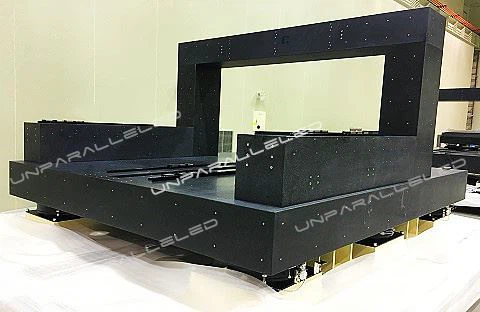
- Large Granite Base: Our large granite bases are ideal for applications that require a large and stable platform. With excellent vibration damping properties and high stiffness, our large granite bases can help you improve the accuracy and stability of your laser processing system.
Contact Us for More Information
If you have any questions about laser polarization or our laser processing systems, please don't hesitate to contact us. Our team of experts is ready to assist you in choosing the right laser polarization for your application and providing you with the best solutions for your laser processing needs. We look forward to working with you and helping you achieve your processing goals.
References
- Smith, J. (2018). Laser Processing Handbook. Wiley.
- Davis, R. (2019). Laser Materials Processing. Cambridge University Press.
- Chen, Y. (2020). Laser Polarization and Its Applications in Materials Processing. Journal of Laser Applications, 32(2), 022001.