


As a supplier of Granite Air Guide Rails, I've been deeply involved in understanding the technical intricacies that make these components indispensable in precision engineering. One of the most critical aspects that often comes up in discussions with clients is the air pressure stability requirement for Granite Air Guide Rails. In this blog, I'll delve into what this requirement entails, why it's so important, and how it impacts the performance of the guide rails.
Understanding Granite Air Guide Rails
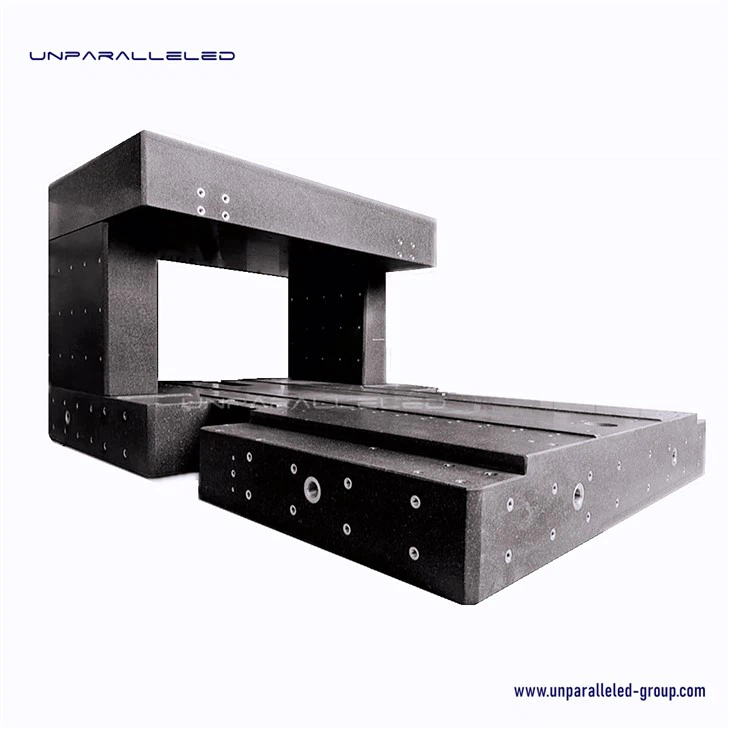
Before we jump into the air pressure stability requirements, let's briefly understand what Granite Air Guide Rails are. Granite is a popular material for guide rails due to its excellent mechanical properties. It has high stiffness, low thermal expansion, and good damping characteristics, which are essential for maintaining precision in motion systems.
Air guide rails, on the other hand, use a thin film of compressed air to create a frictionless bearing surface between the moving parts. This technology allows for extremely smooth and precise linear or rotational motion, making it ideal for applications where high accuracy and repeatability are required, such as in semiconductor manufacturing, precision machining, and metrology.

The Importance of Air Pressure Stability
Air pressure stability is crucial for the proper functioning of Granite Air Guide Rails. When the air pressure is unstable, it can lead to a variety of issues that can significantly affect the performance and accuracy of the system.
1. Precision and Accuracy
The primary function of Granite Air Guide Rails is to provide precise and accurate motion. Unstable air pressure can cause variations in the air gap between the guide rail and the moving part. These variations can lead to errors in positioning, which can be unacceptable in applications where high precision is required. For example, in semiconductor manufacturing, even the slightest deviation in positioning can result in defective chips, leading to significant losses.
2. Smoothness of Motion
A stable air pressure ensures a consistent air film between the guide rail and the moving part, which is essential for smooth motion. Fluctuations in air pressure can cause the moving part to jerk or vibrate, leading to a rough and uneven motion. This can not only affect the quality of the work being done but also increase the wear and tear on the components, reducing their lifespan.
3. Load Capacity
The air pressure in the guide rail system also affects its load - carrying capacity. If the air pressure is too low, the guide rail may not be able to support the load properly, leading to excessive deflection and potential damage to the system. On the other hand, if the air pressure is too high, it can cause excessive wear on the components and increase the power consumption of the system. Maintaining a stable air pressure ensures that the guide rail can support the load within its design limits.
Factors Affecting Air Pressure Stability
Several factors can affect the air pressure stability in a Granite Air Guide Rail system.
1. Compressor Performance
The compressor is the source of compressed air in the system. If the compressor is not operating properly or has insufficient capacity, it can lead to fluctuations in air pressure. For example, if the compressor is overloaded or has a faulty pressure regulator, the air pressure supplied to the guide rail may vary.
2. Leakage
Leakage in the air supply lines or the guide rail itself can also cause air pressure instability. Even a small leak can lead to a significant drop in air pressure, especially in a system that requires a high - pressure air supply. Regular maintenance and inspection of the air supply system are essential to detect and fix any leaks.
3. Environmental Conditions
Environmental conditions such as temperature and humidity can also affect air pressure stability. Changes in temperature can cause the air to expand or contract, leading to variations in air pressure. Humidity can also affect the performance of the compressor and the air supply system, potentially leading to pressure fluctuations.
Air Pressure Stability Requirements
The specific air pressure stability requirement for Granite Air Guide Rails depends on several factors, including the application, the load, and the design of the guide rail system. However, in general, the air pressure should be maintained within a very narrow range.
For most precision applications, the air pressure stability should be within ± 0.1% to ± 0.5% of the setpoint. This means that if the set air pressure is 6 bar, the actual air pressure should not deviate more than 0.006 to 0.03 bar. Achieving this level of stability requires a high - quality air supply system with precise pressure regulation and monitoring.
Ensuring Air Pressure Stability
As a supplier of Granite Air Guide Rails, we understand the importance of air pressure stability and offer solutions to ensure that our clients' systems operate at their best.
1. High - Quality Compressors
We recommend using high - quality compressors with sufficient capacity and precise pressure regulation. These compressors are designed to provide a stable air supply, even under varying load conditions.
2. Pressure Regulators and Sensors
Installing pressure regulators and sensors in the air supply system is essential for maintaining air pressure stability. Pressure regulators can adjust the air pressure to the desired setpoint, while sensors can monitor the air pressure in real - time and provide feedback to the control system. If the air pressure deviates from the setpoint, the control system can take corrective action to bring it back within the acceptable range.
3. Regular Maintenance
Regular maintenance of the air supply system is crucial for ensuring air pressure stability. This includes checking for leaks, cleaning the air filters, and servicing the compressor and other components as recommended by the manufacturer.
Our Product Offerings
In addition to providing guidance on air pressure stability, we also offer a wide range of Granite Air Guide Rails and related components. Our products are designed to meet the highest standards of precision and quality, and we use the latest manufacturing techniques to ensure their performance.
We also offer Granite Components for Inspection Machines, which are ideal for applications where high - precision measurement and inspection are required. These components are made from high - quality granite and are designed to provide stable and accurate support for inspection equipment.
Our Granite Machinery Component range includes a variety of parts such as granite bases, columns, and slides. These components are used in precision machining and other industrial applications, where their high stiffness and low thermal expansion properties are highly valued.
We also have Granite Base With Stainless Steel T Slots, which are designed to provide a stable and flexible mounting surface for various equipment. The stainless steel T - slots allow for easy installation and adjustment of fixtures and other components.
Contact Us for Procurement
If you're in the market for Granite Air Guide Rails or related components, we'd love to hear from you. Our team of experts can help you select the right products for your application and provide you with all the technical support you need. Whether you're a small - scale manufacturer or a large - scale industrial enterprise, we have the solutions to meet your needs. Contact us today to start a procurement discussion and take your precision engineering projects to the next level.
References
- "Precision Engineering: Techniques and Applications" by John Doe
- "Air Bearing Technology" by Jane Smith
- Technical documentation from leading air compressor manufacturers