


Hey there! As an air bearing supplier, I've been getting a ton of questions lately about the difference between air bearings and traditional bearings. So, I thought I'd take a moment to break it down for you in a way that's easy to understand.
Let's start with the basics. Traditional bearings, like ball bearings or roller bearings, have been around for ages. They're the workhorses of the mechanical world, used in everything from cars to industrial machinery. These bearings rely on physical contact between moving parts to support loads and reduce friction. For example, in a ball bearing, the balls roll between an inner and outer race, allowing the two parts to move relative to each other with less resistance.
On the other hand, air bearings are a bit more high - tech. Instead of physical contact, they use a thin film of pressurized air to separate the moving parts. This air film acts as a lubricant and support system, providing a smooth and frictionless movement.
Friction and Wear
One of the most significant differences between air bearings and traditional bearings is friction. Traditional bearings have some level of friction due to the contact between their components. Over time, this friction can cause wear and tear on the bearing surfaces. The balls or rollers can start to flatten, and the races can develop grooves. This wear not only shortens the lifespan of the bearing but can also lead to increased noise, vibration, and reduced performance.
In contrast, air bearings have virtually zero friction. Since there's no physical contact between the moving parts, there's no wear and tear. This means that air bearings can last much longer than traditional bearings, especially in high - precision applications where even the slightest amount of wear can affect the accuracy of the system.
Precision and Accuracy
When it comes to precision, air bearings really shine. Because of the frictionless operation, they can provide extremely high levels of accuracy. In applications like semiconductor manufacturing, where precision is crucial, air bearings are often the go - to choice. They can move with micron - level accuracy, which is almost impossible to achieve with traditional bearings.
Traditional bearings, while they can be very precise, are limited by factors like manufacturing tolerances and the effects of friction and wear. As the bearing wears, its accuracy can degrade over time.
Speed
Air bearings are also capable of much higher speeds than traditional bearings. The lack of friction means that there's less heat generated, which is a major limiting factor for traditional bearings at high speeds. Heat can cause the bearing materials to expand, leading to increased friction and potential damage.
With air bearings, you can achieve much higher rotational or linear speeds without worrying about overheating or excessive wear. This makes them ideal for applications like high - speed spindles in machine tools or optical scanners.
Environmental Considerations
Traditional bearings often require lubrication to reduce friction and prevent wear. This lubrication can be a source of contamination in cleanroom environments or applications where cleanliness is essential. For example, in the food and pharmaceutical industries, the risk of lubricant leakage can be a major concern.
Air bearings, on the other hand, are clean and require no lubrication. They're a great choice for cleanroom applications, as they don't produce any particulate matter or contaminants.
Cost
Now, let's talk about cost. Air bearings are generally more expensive than traditional bearings. The technology behind air bearings is more complex, and they require additional components like air compressors and regulators to operate. However, when you consider the long - term benefits, such as longer lifespan, higher precision, and better performance, the cost can be justified in many applications.
Applications
The unique characteristics of air bearings make them suitable for a wide range of applications. For instance, in metrology, where accurate measurement is key, air bearings are used in coordinate measuring machines (CMMs). They provide the high precision needed to measure parts with extreme accuracy.
In the field of lithography for semiconductor manufacturing, air bearings are used to move the wafers with micron - level precision. This ensures that the patterns are etched onto the wafers accurately, which is crucial for the performance of the final semiconductor devices.
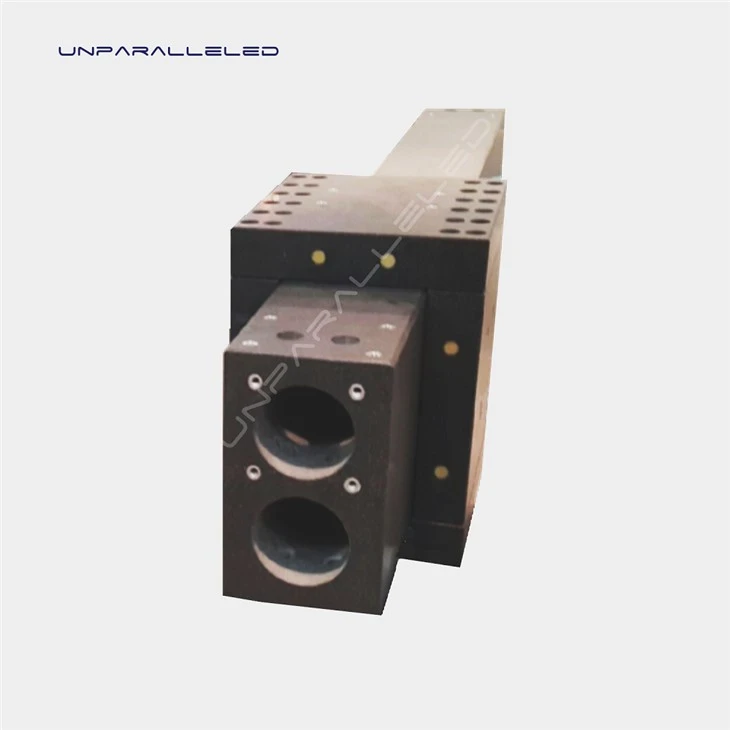
If you're interested in some of the specific air bearing products we offer, check out our Fully Enclosed Granite Air Bearing. It's designed for high - precision applications and offers excellent stability and accuracy.
Another great product is our Inspection Device Granite Base. This base provides a stable platform for inspection devices, and the use of air bearings ensures smooth and accurate movement.
We also have the Granite Assembly with Rails and Screws, which is a versatile solution for various precision applications.
Conclusion
In conclusion, air bearings and traditional bearings have their own unique advantages and disadvantages. Traditional bearings are reliable, cost - effective, and suitable for many general - purpose applications. However, if you need high precision, long lifespan, high speed, and a clean operation, air bearings are the way to go.

If you're in the market for air bearings or have any questions about how they can benefit your application, don't hesitate to reach out. We're here to help you find the best solution for your needs. Whether you're a small - scale manufacturer or a large - scale industrial operation, we can work with you to provide the right air bearing products and support.
References
- "Fundamentals of Machine Elements" by J.E. Shigley and C.R. Mischke
- "Mechanical Design Handbook" by Myer Kutz
- Industry whitepapers on air bearing technology