



In the back-end optical inspection stage of semiconductor manufacturing, benchmark carriers must meet extremely stringent requirements. AOI equipment identifies appearance defects on wafers and packaged devices, capturing submicron-level details via imaging systems. Many equipment manufacturers invest heavily in optical algorithm optimization and motion platform upgrades, yet they often overlook the substrate, the benchmark skeleton of the entire optical system, which directly determines long-term inspection consistency. Under the complex working conditions of semiconductor cleanrooms, cast iron, aluminum alloy and ordinary stone struggle to simultaneously satisfy multiple requirements including particle-free operation, low deformation, micro-vibration resistance and long-term precision retention. For this reason, ultra-precision granite has become the preferred substrate material for high-end semiconductor AOI equipment.
1. Particle-free performance in cleanroom environments
Semiconductor workshops adopt strict dust control standards. Any tiny dust or debris fallout may lead to component scrapping. Metal substrates tend to wear and generate metallic particles under long-term cyclic loading; aged and peeling coatings also introduce contaminants and increase cleanroom maintenance pressure. Porous low-grade marble has soft texture and sheds powder upon friction, failing to meet the dust-free assembly requirements for semiconductor applications.
UNPARALLELED® black granite features dense crystal structure and ultra-low porosity. After ultra-precision grinding, it forms a continuous compact surface layer resistant to chipping and dust generation. Finishing, cleaning and assembly are completed in a dust-free constant-temperature workshop. The finished substrate surface remains stable and will not release particulate matter that contaminates optical chambers and semiconductor workpieces. This property meets the strict requirements of semiconductor dust-free production lines and avoids yield risks caused by material peeling, a clean merit unmatched by metal and ordinary stone.
2. Suppressed dimensional drift under temperature gradients in semiconductor workshops
Although semiconductor workshops maintain constant temperature, continuous heat generation from internal light sources and motion modules creates local temperature gradients. Metal materials carry high thermal expansion coefficients. Minor local temperature rises trigger partial deformation and substrate warpage, shifting the relative position between optical lenses and tested workpieces and resulting in batch inspection misjudgments.
Thanks to its dense crystal structure, granite boasts an ultra-low thermal expansion coefficient and shows minimal deformation response to local temperature differences. Even during non-stop long-hour operation of AOI equipment, temperature changes induced by internal heat sources barely displace the substrate reference plane. Such thermal stability ensures coordinate benchmarks do not drift with equipment heating throughout mass production cycles, enabling consistent identification of micro-defects on wafers and packaged components.
3. Resist multi-source micro-vibration and safeguard optical imaging benchmarks
Semiconductor production lines contain diverse vibration sources: startup and shutdown of adjacent machines, manipulator movements, airflow disturbance from air conditioning systems and low-frequency vibration transmitted through floors. Slight vibration blurs optical images and makes AOI unable to distinguish genuine defects from artifacts caused by image shaking.
Metal structures possess low damping and are prone to resonance when excited by external forces, amplifying vibration. Ordinary stone has uneven internal composition and unstable vibration attenuation. UNPARALLELED granite's natural high-damping structure rapidly dissipates multi-frequency micro-vibration energy and blocks vibration transmission toward optical imaging modules. Combined with one-piece monolithic processing, vibration refraction at splicing gaps is eliminated. The whole optical and motion modules share one stable rigid base, reducing relative shaking between assemblies and guaranteeing sharp defect imaging.
4. Long-term benchmark stability to cut downtime calibration in semiconductor factories
Semiconductor production lines pursue high equipment utilization. Downtime for calibration directly reduces output. Metal substrates suffer from stress aging; deformation occurs after a period of service as internal stress releases, requiring frequent disassembly and recalibration. Ordinary stone is susceptible to wear and gradual degradation of its reference plane over time.
Granite blanks undergo sufficient aging treatment to release residual stress. Finished substrates maintain stable internal stress status and will not deform spontaneously over time. Its high surface hardness and wear resistance slow down the degradation of reference planes under repeated loading from XY platforms. Under strict metrology control, finished substrates retain benchmark precision for extended periods, greatly prolonging calibration cycles, minimizing production downtime losses and increasing effective operation time of production lines.
5. Support customized large-size structures while balancing rigidity and machining accuracy
New-generation semiconductor AOI systems require larger scanning travel ranges, demanding bigger substrates. Large metal workpieces easily suffer from casting defects and machining stress, making large-size processing difficult. Assembled stone pieces carry hidden risks of joint precision errors.
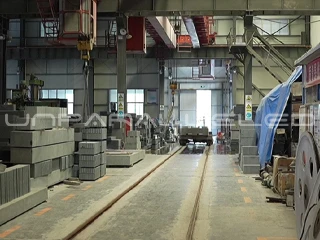
Equipped with heavy-duty CNC equipment and mature ultra-precision grinding technology, UNPARALLELED manufactures large monolithic granite substrates with integrated rigidity and nanometer-level flatness. After machining, full sets of imported metrology instruments including laser interferometers and high-precision electronic levels are deployed for multi-dimensional inspection, with measurement results traceable to national metrology institutes. Custom mounting references, threaded holes, positioning grooves and air bearing mounting surfaces can be fabricated according to the overall layout of semiconductor AOI machines, directly satisfying assembly benchmark requirements for optical modules, linear motor platforms and light source components.
Conclusion
For semiconductor AOI systems, the substrate is far more than a supporting platform. It acts as the precision benchmark for the whole optical inspection system. The advantages of granite lie in cleanroom compatibility, low thermal drift, multi-frequency vibration suppression, long-term benchmark stability and capability for customized large-size processing. These features perfectly fit the rigorous requirements of semiconductor production lines for high cleanliness, high uptime and submicron inspection. Such comprehensive performance makes ultra-precision granite substrates core benchmark components for high-end semiconductor AOI equipment.