



Customers who reach the point of writing this article already know what they need. You have a machine design, a budget envelope, and a deadline, and you are ready to turn a concept into a purchase order. The fastest path from drawing to delivered part is not the cheapest supplier; it is the supplier who can read your requirements the first time. This guide lists exactly what to send when you request a quote for a custom granite component, walks through what happens after you approve a sample, and ends with a copy-paste RFQ template you can send today.
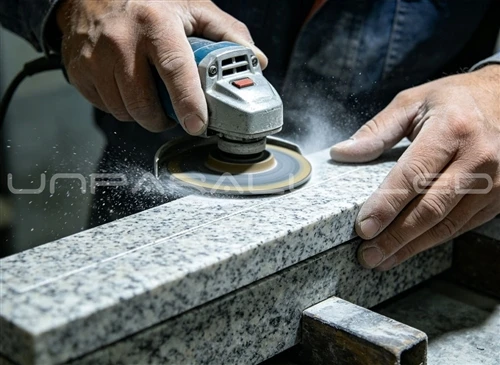
What to Send With Your Quote Request
A complete inquiry removes the back-and-forth that adds weeks to lead time. Provide the following, in this order of importance.
1. Drawing format and files
Send the native CAD file whenever possible. STEP, IGES, DWG, and DXF are all readable by modern granite machining shops; STEP and IGES are preferred because they carry solid geometry cleanly. Always attach a PDF or printed drawing as the reference of record, marked with the revision number and date, because the PDF is what the inspection team will measure against. If you only have a scanned sketch, say so in the email, since scanned dimensions often need confirmation before a price can be firm. A clear granite components drawing package is the single biggest factor in getting an accurate quote on the first reply.
2. Overall dimensions and overall mass
List length, width, height, and target mass. Overall size decides whether the part can be sawn from available block stock and whether it fits the workshop lifting and grinding capacity. For reference, job shops with heavy capability routinely handle single pieces up to roughly 100 tons and monolithic structures up to 20 meters long. State the finished mass target as well, because weight affects handling, packaging, and shipping cost more than dimensions alone.
3. Flatness and geometric tolerances
Give the flatness tolerance as a single value with its reference length, for example 5 micrometers over 1000 millimeters, or as a grade such as DIN 876 grade 0. Do not just write "high precision," because that means different things to different shops. If the part has perpendicularity, parallelism, or position tolerances on machined faces, mark them on the drawing and call them out in the notes. State the measurement standard you expect the final report to follow so there is no ambiguity about how acceptance is judged.
4. Hole patterns, slots, and edges
Specify every hole with position, diameter, depth, and thread type. Mark whether holes are through or blind, and whether they must be countersunk. Slots, T-slots, and edge chamfers should be dimensioned from a clear datum. Edge chipping control matters on lapped granite: state the maximum allowable chip size, typically a small value such as 0.3 to 0.5 millimeters at edges, so the finishing process is set correctly from the start.
5. Inserts and bonded metal parts
Most machine bases need steel threaded inserts, dowel bushings, or air bearing seats bonded into the stone. Define the insert type, material, quantity, location, and the required pull-out strength. Tell the shop whether inserts are installed before or after lapping, because that choice changes the flatness result and the lead time. For air bearing surfaces, specify the seat flatness and any clearance values separately.
6. Load and support conditions
Describe how the part is supported and what load it carries: static mass of mounted equipment, dynamic loads from moving stages, and any point loads from fixtures. This information decides ribbing, insert distribution, and support foot design. A base that looks identical on paper can need very different internal structure depending on whether it supports a 50 kilogram optical head or a 2 ton gantry.
7. Operating environment
State the working temperature, humidity range, and whether the part sits in a cleanroom, vacuum, or coolant environment. Temperature controls the flatness grade you should specify, and environment controls the surface treatment and packaging. If the component will be installed in a 20 degree C metrology room, say so, because that is the reference condition for the quoted tolerance.
From Sample to Shipment: The Production Flow
Sampling and prototype
For production programs, start with a paid sample or a prototype of one. The shop saws the block, rough grinds to near size, and finishes the critical faces. Expect the sample to carry full inspection data so you can verify it against your drawing before releasing volume. For very large parts where a sample is impractical, substitute a video walk-through of the first article plus the inspection report.
Inspection and calibration
Finished granite is measured on electronic levels, autocollimators, and laser instruments, all kept on a documented calibration schedule with traceable certificates. Ask for the report to list the instrument used, its calibration date, and the measured values at each datum. Reputable shops use European and Swiss metrology tools and can show the traceability chain on request; this is the difference between a number you can trust and a number you must re-measure yourself.
Packaging
Granite is heavy and brittle at edges, so packaging is part of quality, not an afterthought. Standard practice is a custom wooden crate with internal foam or padded fixtures that hold the part away from walls, plus edge protection at corners. For export, crates are built to withstand ocean or air freight and labeled with center-of-gravity and lift points. Tell the shop the destination country and mode of transport so the crate matches the journey.
Logistics
Lead time for a typical custom granite base runs from several weeks for a standard part to longer for large monolithic structures or parts requiring special inserts and calibration. The timeline is sawing, rough grind, finish lap, insert work, inspection, and crate. Ask for a milestone schedule with dates, not just a single delivery date, so you can plan your own assembly around it. Most suppliers handle freight forwarding and customs paperwork for export; confirm Incoterms in the quote.
RFQ Template You Can Send Today
Copy the block below, fill the bracketed fields, and attach your drawing. A complete template like this usually gets a firm quote within a few business days instead of a string of clarifying questions.
| Field | Your input |
| Part name and quantity | [e.g. CMM base, 2 pieces] |
| Drawing files | [STEP + PDF, revision and date] |
| Overall dimensions | [L x W x H in mm] |
| Target mass | [kg] |
| Flatness tolerance | [value over reference length, or grade] |
| Other geometric tolerances | [perpendicularity, parallelism, position] |
| Holes, slots, inserts | [type, size, location, pull-out strength] |
| Load and support | [static, dynamic, support points] |
| Environment | [temperature, humidity, cleanroom or vacuum] |
| Surface treatment and edge chip limit | [chip limit in mm] |
| Inspection standard and report needs | [standard, traceable certificate yes or no] |
| Target delivery date and Incoterms | [date, FOB or CIF etc.] |
Why a Good RFQ Protects Your Schedule
The cost of a vague inquiry is paid later, in the form of a sample that misses tolerance, a crate that does not fit the dock, or a flatness grade argued over after delivery. Spending twenty minutes completing the template above shifts that risk back to the planning stage, where it costs nothing to fix. When you are ready, our custom granite machine base service covers drawing review, sampling, full inspection with traceable certificates, export crating, and freight handling under one order, so the part you approve on the sample is the part that arrives at your line. Send the completed template through the inquiry page and include your drawing; the engineering review usually starts the same business day.